
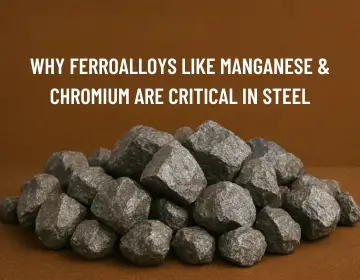
Why Ferroalloys Like Manganese & Chromium Are Critical in Steelmaking
Steel is the backbone of global industries—from construction and manufacturing to energy and infrastructure. However, raw steel in its pure form does not meet the mechanical, chemical, and structural requirements demanded by modern engineering applications. This is where ferroalloys, particularly manganese and chromium, play an indispensable role.
For steel mills, fabrication units, EPC contractors, and manufacturers across the UAE and GCC, understanding the importance of ferroalloys is essential for selecting the right steel grade, improving performance, ensuring compliance, and optimizing production costs.
This comprehensive guide explores how manganese and chromium influence steel properties, their industry applications, procurement considerations, and why sourcing through a trusted supplier like Noble FZE can significantly enhance operations.
What Are Ferroalloys? A Technical Overview
Ferroalloys are alloys of iron combined with one or more chemical elements such as manganese, chromium, silicon, or vanadium. They are used primarily as deoxidizers, alloying agents, and carburizers in steelmaking.
Functions of Ferroalloys in Steel
Deoxidation – Removing excess oxygen to prevent steel brittleness.
Refining – Enhancing purity by binding with sulfur and other impurities.
Alloying – Adding elements to achieve specific mechanical or chemical properties.
Structural Enhancement – Improving grain structure, hardness, flexibility, and durability.
Among the numerous ferroalloys available, ferromanganese and ferrochrome are the most widely used due to their broad impact on steel quality.
Why Manganese Is Essential in Steelmaking
Manganese is one of the most crucial elements added to steel—often referred to as the workhorse of steelmaking. Nearly all steel grades contain some amount of manganese.
Key Functions of Manganese in Steel
1. Deoxidation and Desulfurization
Manganese binds effectively with sulfur and oxygen, preventing the formation of iron sulfide, which causes steel cracking (hot shortness).
2. Strength and Toughness Enhancement
Manganese increases tensile strength while maintaining ductility. It improves wear resistance, making it ideal for heavy-duty applications.
3. Better Hardenability
It enhances the steel’s ability to harden during heat treatment, ensuring uniform mechanical properties throughout.
Why Chromium Is Critical in Steelmaking
Chromium is the defining element behind stainless steel and numerous alloy steel grades.
Key Benefits of Chromium in Steel
1. Corrosion Resistance
Chromium reacts with oxygen to form a passive oxide layer, drastically improving corrosion resistance. This makes chromium essential in UAE’s coastal and desert environments where materials face salinity and temperature extremes.
2. Heat Resistance
Chromium improves steel’s performance at high temperatures, making it suitable for:
- Oil & gas processing equipment
- Power plants
- Industrial furnaces
3. Hardness and Wear Resistance
It increases abrasion resistance, making chromium-rich steels ideal for heavy machinery, mining tools, and construction equipment.
Industry Applications of Manganese & Chromium in Steel
Applications of Manganese-Alloyed Steels
- Structural steel beams & columns
- Reinforcement bars
- Railway tracks
- Crusher components
- Shipbuilding steel
- Automotive steel parts
- Abrasion-resistant mining equipment
Applications of Chromium-Alloyed Steels
- Stainless steel products
- Chemical processing pipes & tanks
- Oil & gas valves, pipes, and fittings
- Heat exchangers
- Engineering tools & cutting instruments
- Aerospace and automotive components
- Wear-resistant plates and sheets
In UAE industries—construction, energy, manufacturing, and petrochemicals—these applications are central to infrastructure growth and production reliability.
Procurement Insights – Choosing the Right Ferroalloy for Your Steel Application
Selecting the right ferroalloy grade ensures consistency, cost-efficiency, and compliance with engineering specifications.
Key Procurement Factors
1. Grade & Composition
Ferroalloys come in varying concentrations (e.g., high-carbon ferromanganese, low-carbon ferrochrome).
Your choice depends on required steel properties, welding needs, and processing conditions.
2. Particle Size
Different furnace and ladle processes require different grain sizes for optimal absorption and reaction.
3. Purity and Low Impurity Levels
High sulfur or phosphorus content can weaken steel. Reliable suppliers ensure controlled impurity thresholds.
4. Compliance with International Standards
UAE buyers often require specifications aligned with:
- ASTM
- EN
- ISO
- JIS
- GCC Standardization requirements
5. Supply Chain Reliability & On-Time Delivery
Ferroalloys are critical inputs—delays can halt production.
This is why working with a dependable UAE-based partner like Noble FZE ensures uninterrupted operations.
Advantages of Using High-Quality Manganese and Chromium Ferroalloys
- Improved steel structural integrity
- Increased mechanical strength
- Higher corrosion and oxidation resistance
- Enhanced weldability and formability
- Reduced production defects
- Better cost efficiency through optimized alloy consumption
- Compliance with engineering standards
- Longer service life of finished components
UAE Market Relevance – Why Ferroalloys Matter More Today
The UAE is undergoing massive industrial transformation, driven by:
- Mega construction projects
- Growth in petrochemical and oil & gas sectors
- Expansion of steel fabrication and engineering industries
- Surge in renewable energy and hydrogen projects
- Industrial hardware and MEP infrastructure demand
High-quality ferroalloys enable manufacturers to produce steel with the mechanical strength and environmental durability required for UAE applications.
Additionally, as the region adopts more sustainable steelmaking practices, ferroalloys like manganese and chromium support:
- cleaner production
- reduced carbon emissions
- longer material lifespan
- enhanced recyclability
Why Choose Noble FZE for Ferroalloys and Industrial Materials?
Noble FZE is a trusted UAE-based supplier of industrial materials, specializing in:
- Steel products & ferroalloys
- Pipes, valves & fittings
- MEP materials
- Oil & gas equipment
- Industrial hardware & construction supplies
What Sets Noble FZE Apart?
1. High-Quality, Certified Materials
We source only from globally recognized producers with strict quality controls.
2. Expert Technical Guidance
Our team helps buyers choose the right ferroalloy grade for their steelmaking or fabrication processes.
3. Reliable Logistics & Timely Delivery Across UAE & GCC
Strong supply chain networks ensure that your production never slows down.
4. Competitive Pricing & Custom Procurement Solutions
Bulk purchasing and strategic sourcing provide cost advantages to clients.
5. Broad Industrial Product Portfolio
From ferroalloys to valves, pipes, fittings, and construction supplies—Noble FZE is your single-source procurement partner.
Frequently Asked Questions (FAQs)
1. What is the difference between ferromanganese and ferrochrome?
Ans: Ferromanganese improves steel strength and acts as a deoxidizer, while ferrochrome enhances corrosion resistance and hardness.
2. Which industries in UAE use ferroalloys?
Ans: Construction, oil & gas, manufacturing, shipbuilding, heavy engineering, and MEP sectors rely heavily on ferroalloys for steel production and fabrication.
3. Why is chromium essential for stainless steel?
Ans: Stainless steel requires at least 10.5% chromium to form a protective oxide layer that prevents corrosion.
4. How do I know which ferroalloy grade I need?
Ans: Evaluate your steel properties, furnace type, impurity limits, and compliance requirements—or consult Noble FZE for technical guidance.
5. Does Noble FZE supply other industrial materials besides ferroalloys?
Ans: Yes. Noble FZE supplies a full range of industrial hardware, steel products, valves, pipes, fittings, MEP materials, and oil & gas equipment.
Conclusion
Ferroalloys like manganese and chromium are not optional additives—they are essential for producing steel that is strong, durable, corrosion-resistant, and suitable for modern industrial applications. As the UAE continues rapid economic and infrastructural expansion, the demand for high-performance steel materials grows accordingly.
Partnering with a trusted supplier such as Noble FZE ensures access to high-quality ferroalloys, consistent supply, expert guidance, and a full suite of industrial materials for construction, oil & gas, MEP, and manufacturing sectors.
For premium ferroalloys and industrial supplies in the UAE, Noble FZE is your reliable procurement partner.